Dill Pickle Cheddar Sourdough Bread
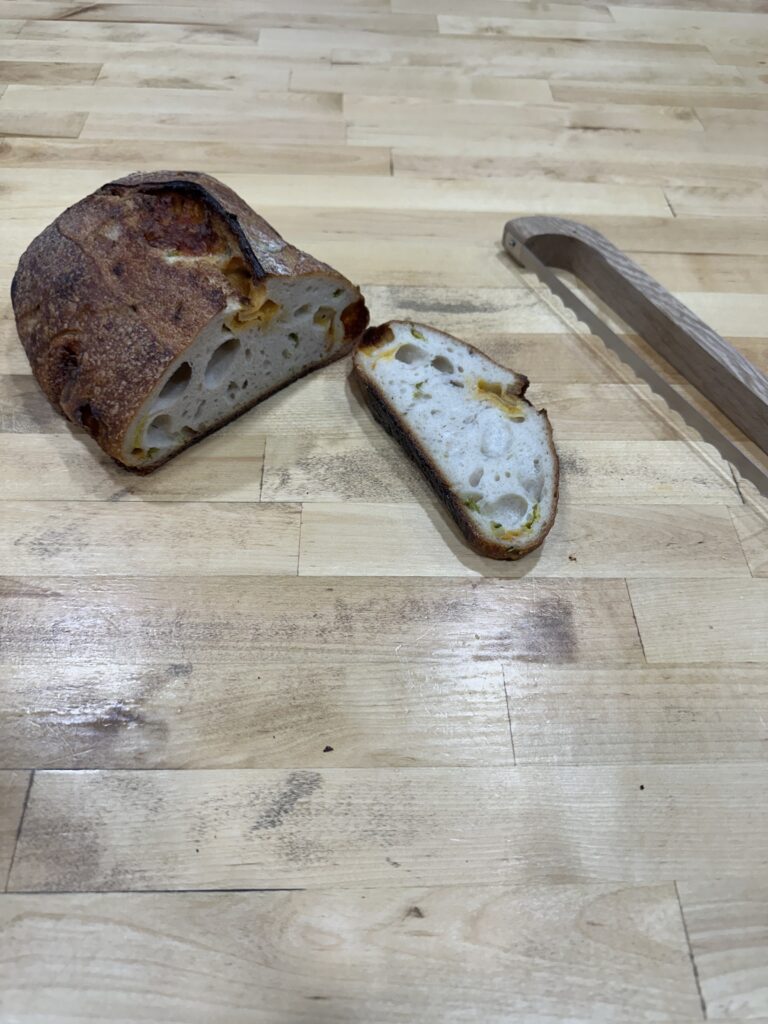
This weekend, Taylor suggested we make a Dill Pickle Cheddar Sourdough Bread. It did not disappoint. Here’s the recipe and pictures, if you’d like to make it yourself.
Most of my sourdoughs are about 65% hydration.
## Dill Pickle Cheddar Sourdough Recipe
*(This makes one loaf — I doubled it for two.)*
**Dough:**
– 500g bread flour- I recomend King Arthur Flour- lots of recipes on their website.
– 310g water
– 100g active levain
– 8g salt
**Mix-ins:**
– 100g chopped dill pickles (chopped and drained *very* well on paper towels)
– 100g sharp cheddar
– 1 tsp dried dill
– ½ tsp cracked black pepper
## Method
1. **Autolyse.** Mix your flour and water together. If you have a mixer with a dough hook, use it. Let it sit for 30–45 minutes. During this rest, the flour fully hydrates and gluten starts developing on its own through enzymatic activity, with no kneading required. The payoff is easier-to-work dough, better gluten structure, and often better crumb and extensibility once you add the levain and salt and start mixing.
2. **Mix in levain and salt.** Add your active levain and salt, and mix until you have a nice, elastic dough.
3. **Bulk ferment with folds.** Form the dough into a ball and place it in a container, covered with a damp towel or a bowl cap. Every 30–45 minutes, dip your hand in water, then, working from the outside of the bowl, pull the dough up and fold it back on top of itself. Work around the bowl in quadrants, folding four times total. During the second fold, add your pickles and cheddar. After the fourth fold, gently shape the dough into a loose ball, but don’t overwork it.
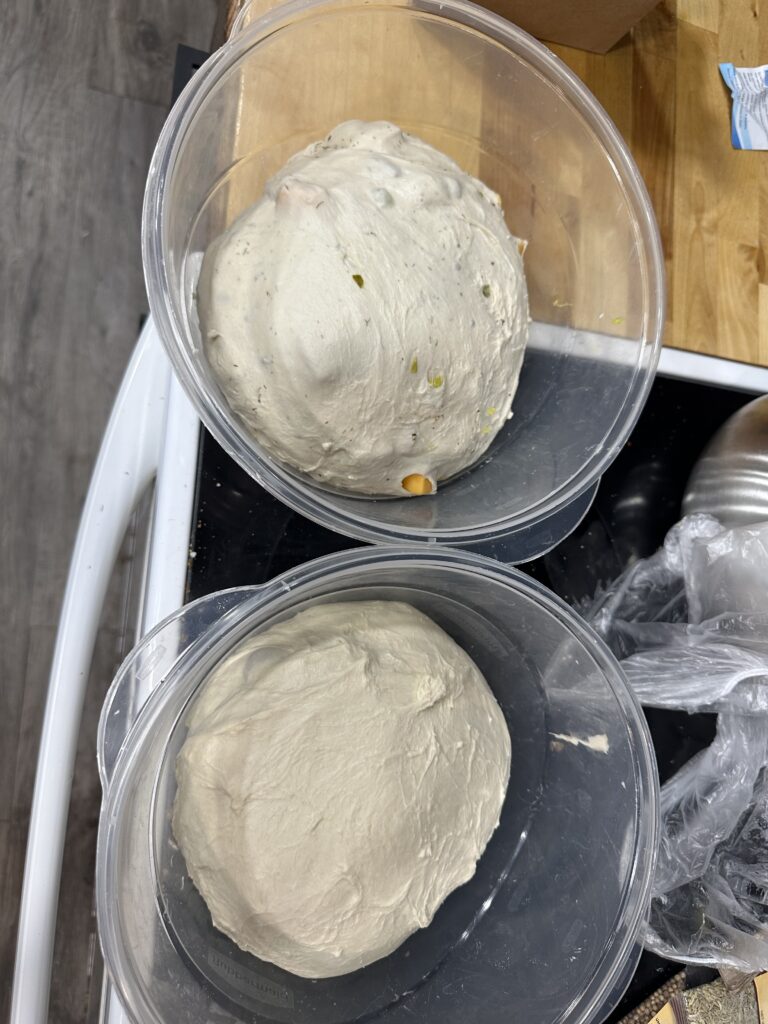
4. **Bulk rise.** Let it rise until puffy and the top jiggles slightly, this can take 1–3 hours depending on temperature and humidity.
5. **Shape.** Once the dough has risen about 50% and is puffy, turn it out onto a clean surface. Shape it into a batard or boule (oblong or round): cup your hand around the back of the dough and pull it toward you, repeating until you’ve built good surface tension.
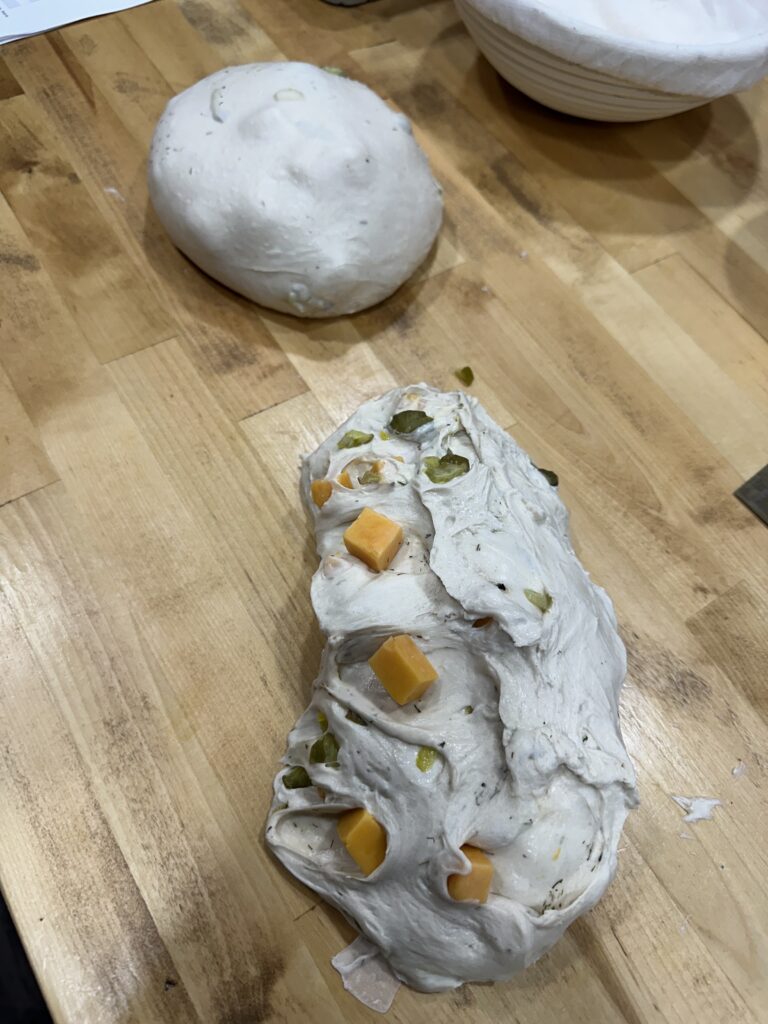
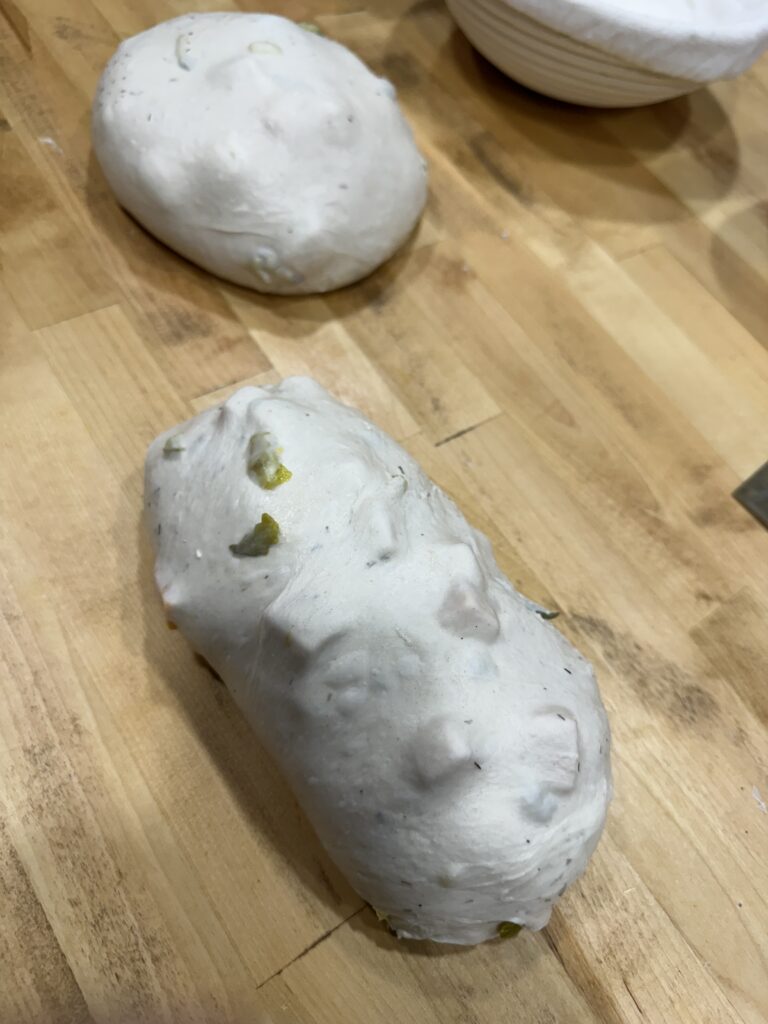
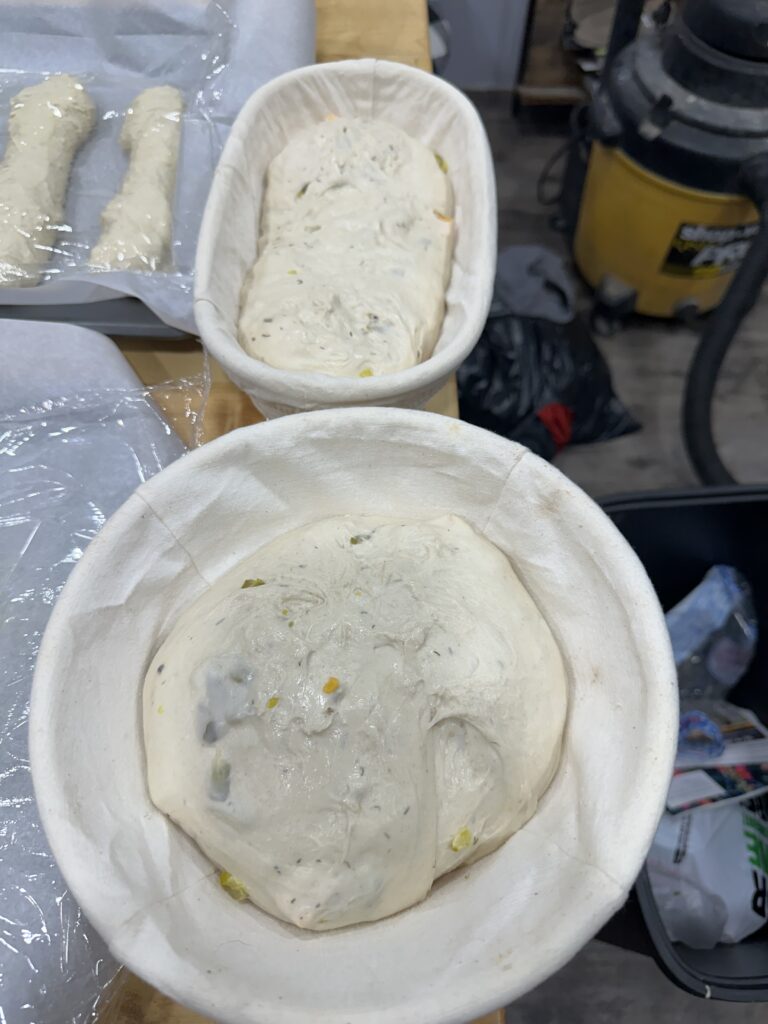
6. **Bench rest and proof.** Let the dough bench rest for 15 minutes, then place it in your banneton (a proofing basket lined with flour-dusted cloth), seam side up. Cover and proof in the refrigerator overnight. You don’t want the dough to dry out.
7. **Preheat.** The next morning, preheat your oven to 500°F with your Dutch oven or bread baking dish inside. Don’t just preheat the oven, you want that cooking vessel itself to be hot.
8. **Score.** Once your vessel is hot, take the bread out of the fridge and gently turn it out onto parchment paper or a silicone bread sling. Lightly dust the top with rice flour, and score it with an “X” across the top, about ½ inch deep. Make it your own, customize the scoring however you like.
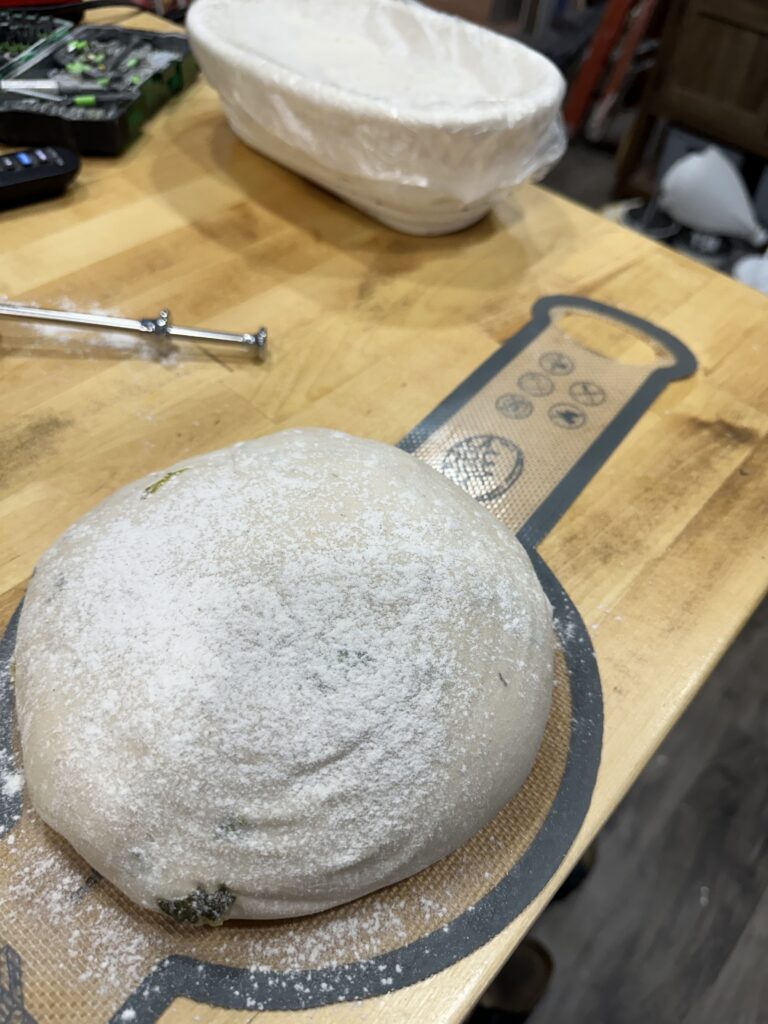
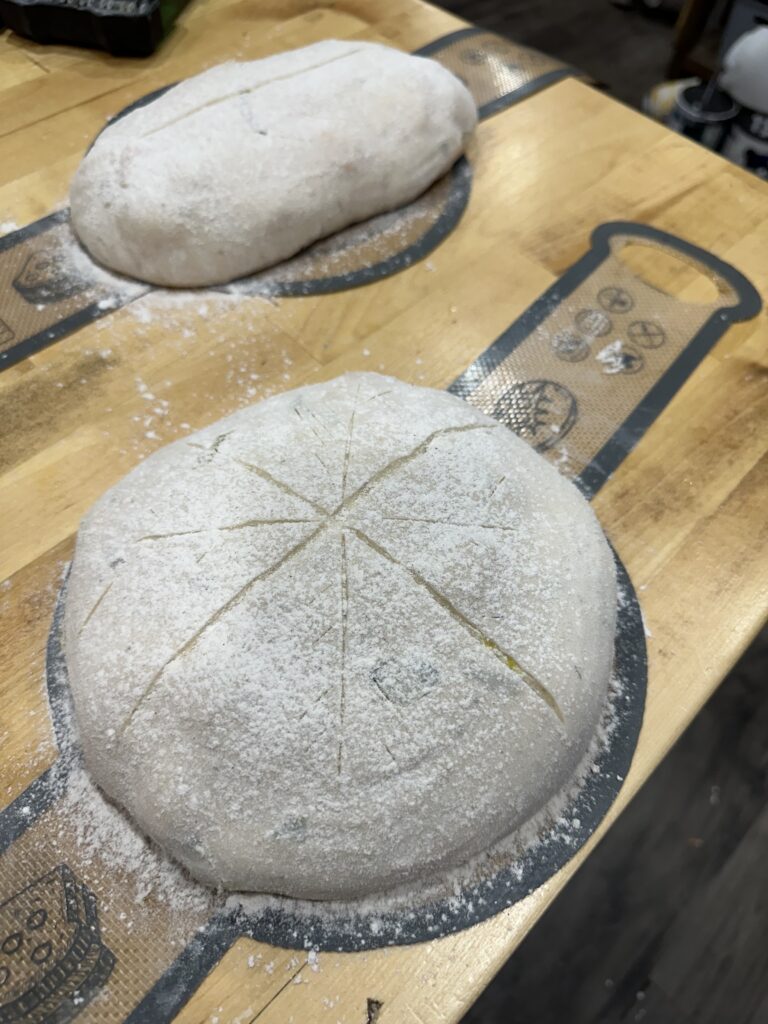
9. **Bake, covered.** Very carefully, lift the dough using the sling or parchment and lower it into the Dutch oven, then immediately cover with the lid. This traps the bread’s moisture and gives you an incredible crust. Bake for 20–25 minutes, no peeking.
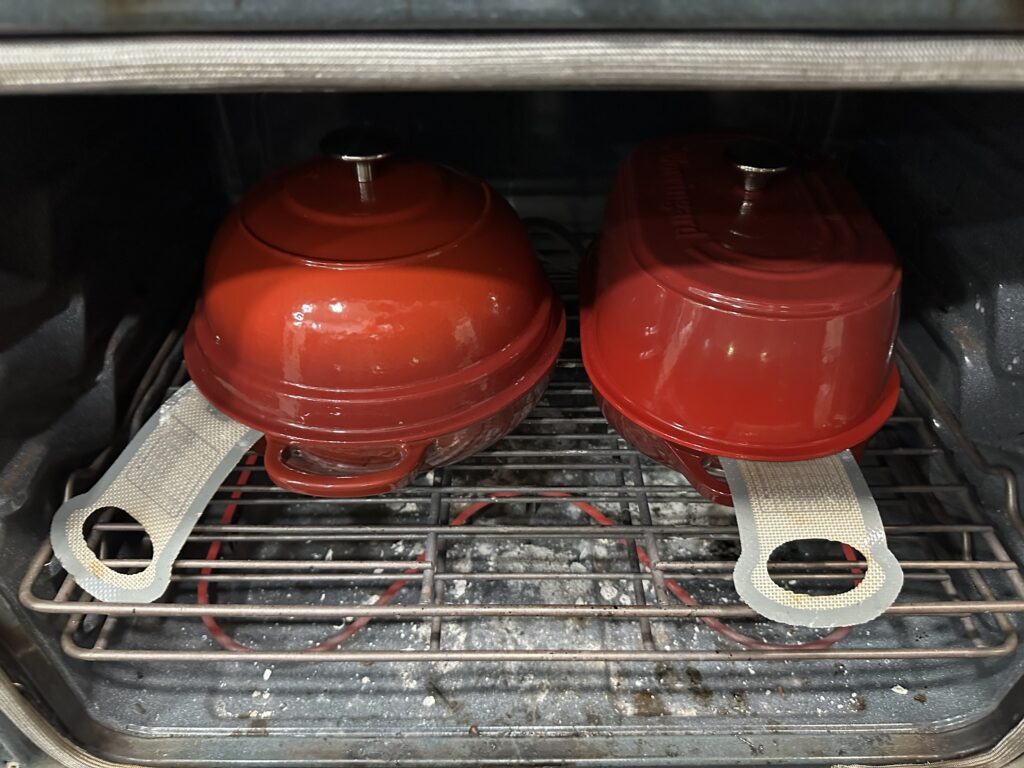
10. **Bake, uncovered.** Remove the lid and turn the oven down to 450°F. I use a thermometer at this point and bake until the internal temperature reaches 212–214°F.
11. **Cool.** Remove the Dutch oven from the oven and carefully lift the bread out using oven mitts, placing it on a wire rack. When you can, lift the bread off the sling or parchment so it cools evenly on all sides.
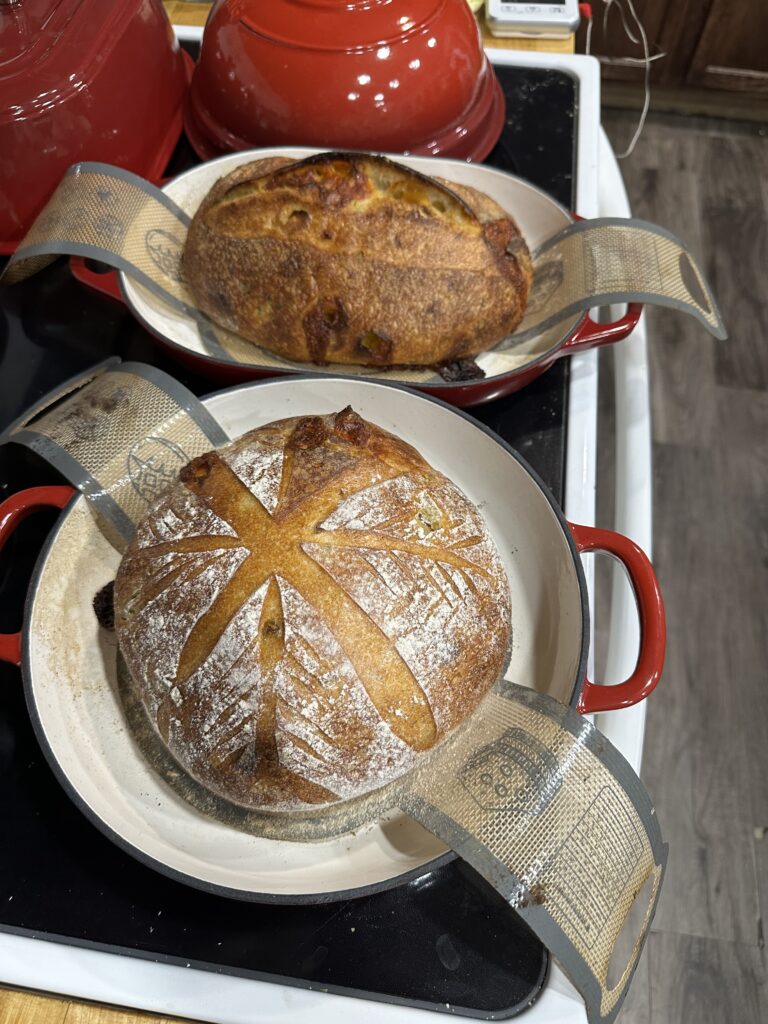
12. **The hardest part.** For best results, wait about 2 hours before slicing.
## Tools of the Trade
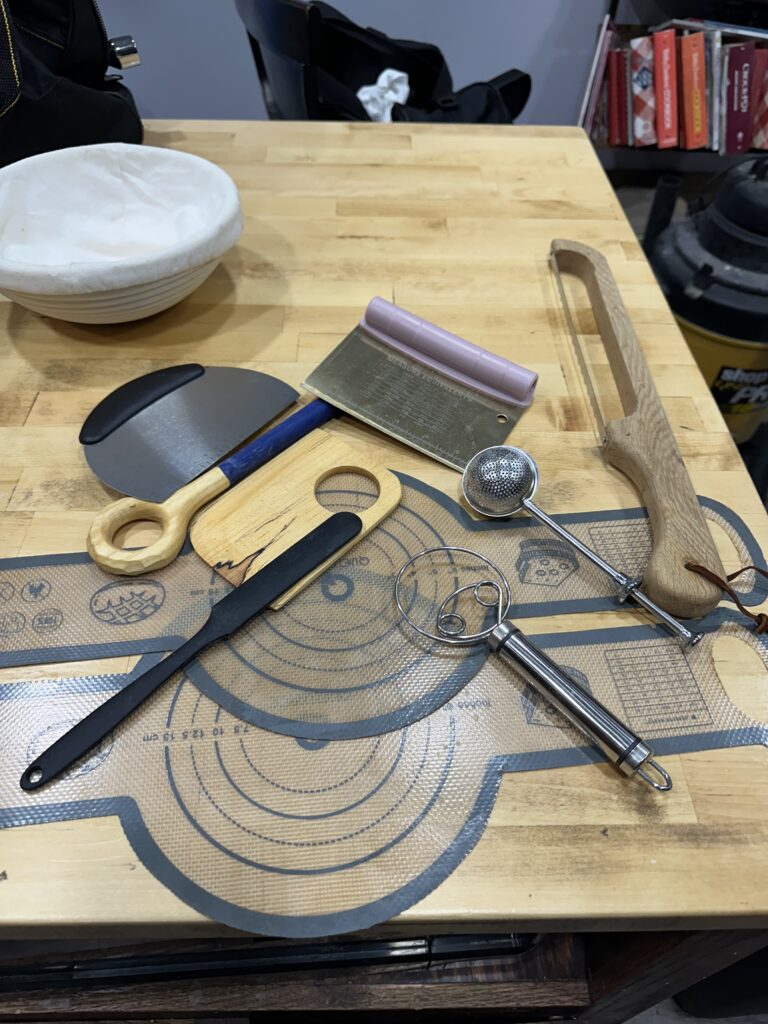
Here are a few of the tools we use: proofing baskets for rectangular and oval loaves, round baskets, and small loaf baskets (great for bread bowls, think soup bowls or a spinach-artichoke dip bowl). We also rely on a few mixing utensils, dough scrapers, a dough lame for scoring, and silicone bread transfer slings. See our other baked goods.
Enjoy!
Chad & Dexter